"Supermoon" may cause natural disasters next week

On March 19th 2011, the moon will make its closest approach to Earth in almost 20 years, possibly triggering earthquakes, volcanic eruptions and other disasters.

The phenomenon, called lunar perigee or Supermoon, happens when the moon reaches its absolute closest point to Earth. On March 19, the natural satellite will be only 221,567 miles away from our planet. There were Supermoons in 1955, 1974, 1992 and 2005, and these years had their share of extreme weather conditions, too. Although there are scientific laws that say the moon affects the Earth, it's still ambiguous whether the lunar perigee and natural disasters is coincidence or not.
British freelance weatherman John Kettley was quoted as saying "A moon can't cause a geological event like an earthquake, but it will cause a difference to the tide. If that combines with certain weather conditions, then that could cause a few problems for coastal areas."
Interesting numbers from the Forbes rich list
Mexican tycoon Carlos Slim is the richest person in the world for the second year in a row, Forbes said on Wednesday.
Rising steel and oil prices in Russia, more honest disclosure in Brazil and booming economies in China and India has fueled a spike in billionaires in the so-called BRIC countries, Forbes list of the World's Billionaires found.
Here are some statistics from the Forbes 2011 ranking of the world's billionaires:
- There are 1,210 billionaires in the world in 2011, up from 1,011 last year. Of those, 102 are women, up from 89 in 2010.
- There are 648 billionaires who increased their wealth in the past year. The fortunes of 160 fell, while 146 stayed even.
- There are 413 billionaires in the United States with a net worth of $1.5 trillion. This is up from 403 in 2010 and a value of $1.3 trillion.
- * There are 300 billionaires in Europe with a net worth of $1.3 trillion, up from 248 billionaires last year with a fortune of $1 trillion.
- In the Asia-Pacific region there are 332 billionaires worth $996 billion, compared with 234 billionaires in 2010 valued at $729 billion.
- * The Middle East and Africa have 89 billionaires with a fortune of $251 billion, up from 65 last year worth $181 billion.
- * In the Americas (excluding the United States) there are 76 billionaires with a net worth of $419 billion, compared with 61 billionaires last year valued at $304 billion.
- There are 214 billionaires making their debut on the Forbes list. Brazil, Russia, India and China accounted for 108 of those newcomers.
- * Forty-seven people have dropped off the list from last year, another 10 died, and 42 returned to the billionaire ranking.
- Billionaires in the United States are the oldest with an average age of 66, followed by the Americas (65) and the Middle East and Africa (60). The average age is 59 in the Europe and Asia Pacific regions.
- * Dustin Moskovitz of Facebook fame is the youngest billionaire in the world at 26, with a fortune of $2.7 billion
- The oldest billionaire is Swiss tech billionaire Walter Haefner, who is 100 and worth $4 billion.
The full Forbes ranking of the world's billionaires can be seen at www.forbes.com/billionaires
(Reporting by Michelle Nichols; Editing by Gary Hill).........
Magnetic Boy

A 7-year-old Serbian boy named Bogdan is making international news for an apparently paranormal ability.
According to MSNBC, Bogdan attracts household objects such as spoons, knives and forks with almost supernatural ease. The idea that a person could generate a strong magnetic field is bizarre, but what’s even stranger is that other things such as small plates, small flat glass objects and even a remote control stick to him too.
- According to Benjamin Radford, renowned skeptic and managing editor of the magazine Skeptical Inquirer, there are several clues in the videos as to what’s really going on.
- “A lot of times when you see these videos, the people are leaning back slightly,” Radford told Life’s Little Mysteries. “If there really is some magnetic attraction, the person should be able to lean over. If a magnetic force is overcoming gravity, we should see that. That’s one strong clue that what we’re seeing is not any sort of magnetism.”
- Second, glass plates and a non-metallic remote control, as well as metal objects, are shown sticking to Bogdan’s chest. “Glass is not magnetic. If a smooth piece of glass is sticking to him and a smooth piece of metal, what do those have in common? A very smooth surface. Not magnetism.”
- That shows that quite a different physical effect is at play. “These people aren’t magnetic, it’s just that things that have smooth surfaces stick to skin,” said Radford, adding, “Often these magnetic people have smooth skin and hairless chests.”
Showing newest posts with label Intresting. Show older posts
Showing newest posts with label Intresting. Show older posts
"Supermoon" may cause natural disasters next week
On March 19th 2011, the moon will make its closest approach to Earth in almost 20 years, possibly triggering earthquakes, volcanic eruptions and other disasters.
The phenomenon, called lunar perigee or Supermoon, happens when the moon reaches its absolute closest point to Earth. On March 19, the natural satellite will be only 221,567 miles away from our planet. There were Supermoons in 1955, 1974, 1992 and 2005, and these years had their share of extreme weather conditions, too. Although there are scientific laws that say the moon affects the Earth, it's still ambiguous whether the lunar perigee and natural disasters is coincidence or not.
British freelance weatherman John Kettley was quoted as saying "A moon can't cause a geological event like an earthquake, but it will cause a difference to the tide. If that combines with certain weather conditions, then that could cause a few problems for coastal areas."
Interesting numbers from the Forbes rich list
Mexican tycoon Carlos Slim is the richest person in the world for the second year in a row, Forbes said on Wednesday.
Rising steel and oil prices in Russia, more honest disclosure in Brazil and booming economies in China and India has fueled a spike in billionaires in the so-called BRIC countries, Forbes list of the World's Billionaires found.
Here are some statistics from the Forbes 2011 ranking of the world's billionaires:
- There are 1,210 billionaires in the world in 2011, up from 1,011 last year. Of those, 102 are women, up from 89 in 2010.
- There are 648 billionaires who increased their wealth in the past year. The fortunes of 160 fell, while 146 stayed even.
- There are 413 billionaires in the United States with a net worth of $1.5 trillion. This is up from 403 in 2010 and a value of $1.3 trillion.
- * There are 300 billionaires in Europe with a net worth of $1.3 trillion, up from 248 billionaires last year with a fortune of $1 trillion.
- In the Asia-Pacific region there are 332 billionaires worth $996 billion, compared with 234 billionaires in 2010 valued at $729 billion.
- * The Middle East and Africa have 89 billionaires with a fortune of $251 billion, up from 65 last year worth $181 billion.
- * In the Americas (excluding the United States) there are 76 billionaires with a net worth of $419 billion, compared with 61 billionaires last year valued at $304 billion.
- There are 214 billionaires making their debut on the Forbes list. Brazil, Russia, India and China accounted for 108 of those newcomers.
- * Forty-seven people have dropped off the list from last year, another 10 died, and 42 returned to the billionaire ranking.
- Billionaires in the United States are the oldest with an average age of 66, followed by the Americas (65) and the Middle East and Africa (60). The average age is 59 in the Europe and Asia Pacific regions.
- * Dustin Moskovitz of Facebook fame is the youngest billionaire in the world at 26, with a fortune of $2.7 billion
- The oldest billionaire is Swiss tech billionaire Walter Haefner, who is 100 and worth $4 billion.
The full Forbes ranking of the world's billionaires can be seen at www.forbes.com/billionaires
(Reporting by Michelle Nichols; Editing by Gary Hill)
Russian flight controllers claim aliens spoke to them in 'cat-like language'
Air traffic controllers in Siberia claim to have been buzzed by a high-speed UFO with a female sounding alien speaking to them in an unintelligible cat-like language. The object had suddenly burst onto flight monitors over the remote Russian diamond capital of Yakutsk, and it was shown flying at a speed of slightly over 6000 mph, and rapidly changing direction.
The UFO was logged at a height of 64, 895 feet above sea level and appeared to interfere with aviation frequencies.
A YouTube footage showed an air traffic controller trying to make contact with the UFO, while a radar showed the UFO moving rapidly through the skies surrounded by planes that were travelling at a much slower pace.
"I kept hearing some female voice, as if a woman was saying mioaw-mioaw all the time," the Daily Mail quoted the air traffic controller as telling the pilot of a passing Aeroflot flight.
The air traffic control monitor automatically designated the UFO as "00000" because it did not have a flight number.
At one point the UFO is shown moving away from Yakutsk at great speed before turning and heading back towards the city.
The UFO was logged at a height of 64, 895 feet above sea level and appeared to interfere with aviation frequencies.
A YouTube footage showed an air traffic controller trying to make contact with the UFO, while a radar showed the UFO moving rapidly through the skies surrounded by planes that were travelling at a much slower pace.
"I kept hearing some female voice, as if a woman was saying mioaw-mioaw all the time," the Daily Mail quoted the air traffic controller as telling the pilot of a passing Aeroflot flight.
The air traffic control monitor automatically designated the UFO as "00000" because it did not have a flight number.
At one point the UFO is shown moving away from Yakutsk at great speed before turning and heading back towards the city.
Magnetic Boy
A 7-year-old Serbian boy named Bogdan is making international news for an apparently paranormal ability.
According to MSNBC, Bogdan attracts household objects such as spoons, knives and forks with almost supernatural ease. The idea that a person could generate a strong magnetic field is bizarre, but what’s even stranger is that other things such as small plates, small flat glass objects and even a remote control stick to him too.
- According to Benjamin Radford, renowned skeptic and managing editor of the magazine Skeptical Inquirer, there are several clues in the videos as to what’s really going on.
- “A lot of times when you see these videos, the people are leaning back slightly,” Radford told Life’s Little Mysteries. “If there really is some magnetic attraction, the person should be able to lean over. If a magnetic force is overcoming gravity, we should see that. That’s one strong clue that what we’re seeing is not any sort of magnetism.”
- Second, glass plates and a non-metallic remote control, as well as metal objects, are shown sticking to Bogdan’s chest. “Glass is not magnetic. If a smooth piece of glass is sticking to him and a smooth piece of metal, what do those have in common? A very smooth surface. Not magnetism.”
- That shows that quite a different physical effect is at play. “These people aren’t magnetic, it’s just that things that have smooth surfaces stick to skin,” said Radford, adding, “Often these magnetic people have smooth skin and hairless chests.”
Android ‘Honeycomb' challenges Apple's iPad

Earlier this week, Google unveiled its Android 3.0 operating system code-named ‘Honeycomb.' It has since received positive buzz across online geek forums for what many see as the open source operating system that will help Android Tablet PCs challenge Apple's iPad, the undisputed market leader now, which runs on its proprietary operating system.
Technology writers, who were invited to the Google headquarters at Mountain View, California, on February 2, were among the first to get an in-depth view of Android's Honeycomb eco-system. It has come across as operating system built from scratch with the new form factor of tablet PCs in mind. Most of the widely followed technology blogs have already given it their thumbs-up.
The first of the tablet PCs sporting Honeycomb, Motorola's Xoom, is expected to hit the retail markets soon.
Huge leap
The predominant verdict is that not only has Honeycomb been a huge leap over the previous versions of Android OS, which, to be fair, have been designed for smartphones running on much lower specifications. It also comes across as a good introduction to the Android ecosystem, in ease of use. It also supports multi-tasking, among many other new experiences.
Hardware specifications
The new OS also seems to have been designed keeping in mind the advanced hardware specifications that most Android tablet PCs set to hit the markets world over through the year are expected to sport. Motorola's Xoom tablet PC, previewed at the CES event in Vegas last month, is one such device with fairly advanced specifications: it has a dual core processor as its CPU and full HD support. In many ways, Honeycomb is seen as the OS that would help the Android tablets compete with the next version of iPad.
In-built GPUs
Thanks to a host of next-generation processors that are both capable and low-power consuming, most tablets are expected to have in-built GPUs (graphic processor units) in addition to the CPU. Android Honeycomb has ‘renderscript' for hardware accelerated-3D animation that makes the user experience smooth. This has made it possible for the desktop to have a 3D effect and features the ‘flip experience' that many users have got used to in the Apple ecosystem. Serious geeks will know that such effects have long existed in the Linux ecosystem.At this point, it is still not officially clear whether Honeycomb will also have a separate OS for smartphones. There is speculation that there could be one with a different user-interface as it could allow ‘syncing' without any drastic change in the look and the feel.
Bigger numbers
By virtue of being open source, Honeycomb is most likely to have bigger numbers in terms of deployment because of the number of vendors backing it. But it is still not exactly a two-horse race between Apple's proprietary OS and Android's Honeycomb. Blackberry's Playbook tablet PC, which runs its own OS and is set to hit the markets soon, has received good press so far. This could be the first year of an all-out battle of the tablet PCs.
Black money list revealed From Liechtenstein Bank
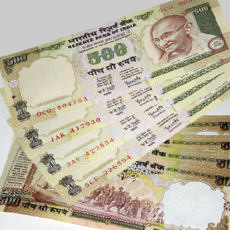
After two years of debates and controversies the list of eighteen Indians who have stashed ‘black money’ in the LGT bank of Liechtenstein is out.
The list which was officially handed over to the Indian Government on March 18, 2009 includes 12 trusts and 26 beneficiaries.
The list that Germany shared with India had 12 trusts out of which four belong to Indians. The beneficiaries are
1 . Manoj Dhupelia
2 . Rupal Dhupelia
3 . Mohan Dhupelia
4 . Hasmukh Gandhi
5 . Chintan Gandhi
6 . Dilip Mehta
7 . Arun Mehta
8 . Arun Kochar
9 . Gunwanti Mehta
10. Rajnikant Mehta
11. Prabodh Mehta
12. Ashok Jaipuria
13. Raj Foundation
14. Urvashi Foundation
15. Ambrunova Trust
2 . Rupal Dhupelia
3 . Mohan Dhupelia
4 . Hasmukh Gandhi
5 . Chintan Gandhi
6 . Dilip Mehta
7 . Arun Mehta
8 . Arun Kochar
9 . Gunwanti Mehta
10. Rajnikant Mehta
11. Prabodh Mehta
12. Ashok Jaipuria
13. Raj Foundation
14. Urvashi Foundation
15. Ambrunova Trust
According to CNN IBN, the amounts in the twelve accounts totals nearly to Rs 52 Crores.
The list has been leaked out of various media houses across the country. However, experts are of the view that this could be a plant – while the real account holders are some where out there.
Mona Lisa model was a "male" say Italian researchers

For centuries, people have been speculating about who modeled for Leonardo Da Vinci's "Mona Lisa." Was it Lisa Gherardini, the wife of a Florentine merchant? Was it Isabella of Aragon? Was it the artist himself, as some experts believe? Or was it, as new research suggests, none of the above?
An Italian art historian, Silvano Vinceti, believes the model for the "Mona Lisa" was a man named Gian Giacomo Caprotti, better known as Salai, a male apprentice (and possible lover) of da Vinci.
At a press conference in Rome on Wednesday, Vinceti explained his theory. "Salai was a favorite model for Leonardo," Vinceti said. "Leonardo certainly inserted characteristics of Salai in the last version of the 'Mona Lisa.'" Vinceti pointed out the similarities between the noses and mouths as examples.
Following the press conference, Web searches on "da vinci salai" and "gian giacomo caprotti" both soared.
Earlier this year, Vinceti remarked that he discovered some objects in the eyes of the "Mona Lisa." He says he has found the letter "S" in the woman's left eye, the letter "L" in her right eye, and the number "72" under the bridge in the background. The images are not visible to the naked eye. Scientific equipment was used.
Vinceti doesn't necessarily believe that Salai was the only inspiration for the world's most famous painting. At the press conference, the historian said, "the 'Mona Lisa' must be read at various levels, not just as a portrait." In other words, according to Vinceti, there were likely multiple inspirations for the painting.
Not everyone agrees with Vinceti's opinions. In an interview with the AP, Marani, an art professor at Milan's Politecnico University, called Vinceti's theory "groundless." He further remarked, "The work ('Mona Lisa') began as the portrait of Lisa Gherardini, but over the years in Leonardo's hands it slowly turned into something else: an idealized portrait, not a specific one."
This isn't the first time an art expert has linked Salai to one of da Vinci's works. Vinceti believes other works, including "St. John the Baptist," were also based on Salai. Others have floated the "Mona Lisa" theory as well.


An Italian art historian, Silvano Vinceti, believes the model for the "Mona Lisa" was a man named Gian Giacomo Caprotti, better known as Salai, a male apprentice (and possible lover) of da Vinci.
At a press conference in Rome on Wednesday, Vinceti explained his theory. "Salai was a favorite model for Leonardo," Vinceti said. "Leonardo certainly inserted characteristics of Salai in the last version of the 'Mona Lisa.'" Vinceti pointed out the similarities between the noses and mouths as examples.
Following the press conference, Web searches on "da vinci salai" and "gian giacomo caprotti" both soared.
Earlier this year, Vinceti remarked that he discovered some objects in the eyes of the "Mona Lisa." He says he has found the letter "S" in the woman's left eye, the letter "L" in her right eye, and the number "72" under the bridge in the background. The images are not visible to the naked eye. Scientific equipment was used.
Vinceti doesn't necessarily believe that Salai was the only inspiration for the world's most famous painting. At the press conference, the historian said, "the 'Mona Lisa' must be read at various levels, not just as a portrait." In other words, according to Vinceti, there were likely multiple inspirations for the painting.
Not everyone agrees with Vinceti's opinions. In an interview with the AP, Marani, an art professor at Milan's Politecnico University, called Vinceti's theory "groundless." He further remarked, "The work ('Mona Lisa') began as the portrait of Lisa Gherardini, but over the years in Leonardo's hands it slowly turned into something else: an idealized portrait, not a specific one."
This isn't the first time an art expert has linked Salai to one of da Vinci's works. Vinceti believes other works, including "St. John the Baptist," were also based on Salai. Others have floated the "Mona Lisa" theory as well.
The World's Happiest Countries::Fobes Servey
No. 5: New Zealand
New Zealanders enjoy very high levels of social cohesion and a first-place ranking in education.
iStock
iStock
With very high levels of social cohesion and a first-place ranking in education, New Zealanders trust and help each other. The country ranks first in civil liberties. Ninety-four percent found the beauty of their physical environment satisfying (the other 6% must be blind).
No. 4: Australia
Citizens of Australia trust their government.
Thinkstock
Thinkstock
Excellent education, strong personal freedoms, a tight-knit society. Australia's economy is strong, led by raw materials exports, but it's also a good place to start a business, with plentiful Internet connectivity and low startup costs. Aussies trust their government.
No. 3: Finland
Low business startup costs give the Finns economic strength.
Thinkstock
Thinkstock
Excellent education, universal health care, plentiful personal freedoms, trusted government, peaceful. Lots of R&D and low business startup costs give the Finns economic strength. But as is to be expected in a country with the highest redistribution of wealth, only 75% of Finns believe working hard will help them get ahead.
No. 2: Denmark
Denmark reports the highest standard of living in the world.
Thinkstock
Thinkstock
The world's lowest business startup costs, excellent education, unrestricted civil freedoms. Danes have overwhelming faith in their government and in each other, and report the highest standard of living in the world.
No. 1: Norway

The world's highest per-capita GDP at $53,000 a year. Spending on health care is second-highest after the U.S. An unparalleled 74% of Norwegians say other people can be trusted, 94% are happy with the beauty of their environment, and a very high 93% believe hard work will help them get ahead in life. Having a lot of oil and gas reserves helps.
Man Rescued After 16 Hours Buried Under Mud
A Brazilian man has had a remarkable escape after being buried in mudslides under his house for 16 hours.
Rescuers found 42-year-old Marcelo Fonseca under four metres of mud and rubble in the state of Rio de Janeiro.
He had been trapped under the debris for 16 hours.
A loud cheer went up from residents as rescuers finally broke through to their neighbour.
Mr Fonseca said he was not fast enough to run away from the river of mud as it descended on his house.
"When I opened the window I heard that loud thud and I only had time to run," Mr Fonseca said.
"When I ran and reached the front door, it was such a powerful thing that I only saw some pieces of the roof flying.
"My chest was being crushed by a stone and I was trapped.
"My two feet were trapped."
Bruised, scratched and with a liver infection, Mr Fonseca is now recovering in hospital.
At least 665 people are known to have died after heavy rain last week triggered mudslides and flooding in mountains north or Rio.
Many more are still missing.
Several hundred troops are helping with the rescue effort, attempting to reach areas cut off by the disaster.
Paul(the Octopus Who Predicted World Cup Matches)is Dead

Paul the Octopus is dead and even before the ink has dried - in him, not on the contracts that his handlers presumably signed as he became the world's first celebrity cephalopod - a successor has been found, and given the same name. Whether the French-born successor displays the same power of discernment in his mussels remains to be seen, but Diego Maradona is not the only one who is unlikely to shed tears about the earlier Paul passing on. While punters (and the merchandisers who had cashed in on octomania this year) may welcome the arrival of another soothsaying octopus, the betting industry is very unlikely to be enthused. Paul's prognostications and legendary prescience cost that industry an estimated £1 million during this year's FIFA World Cup . So the chances are they will be hoping that Paul II will get his tentacles in a twist, or move to the great aquarium in the sky before the next big sporting extravaganza. Needless to add, if public belief in the infallibility of incorruptible invertebrates rises, successive Pauls must be kept beyond the tentacles of the match-fixing mafia.
It is disappointing, however, that the tentacled tipster's managers have announced that Paul I would be buried in the precincts of the German aquarium where he lived. It would have been far more beneficial to donate his body to science so that light could be shed on his marvellous talent. If it was the result of some cephalopodan genetic peculiarity, a new career avenue could have opened up for squid and octopi the world over. Rather than being the stuff of horror movies or seafood platters, octopus oracles could be a new line of business for coastal communities.
It is disappointing, however, that the tentacled tipster's managers have announced that Paul I would be buried in the precincts of the German aquarium where he lived. It would have been far more beneficial to donate his body to science so that light could be shed on his marvellous talent. If it was the result of some cephalopodan genetic peculiarity, a new career avenue could have opened up for squid and octopi the world over. Rather than being the stuff of horror movies or seafood platters, octopus oracles could be a new line of business for coastal communities.

No comments:
Post a Comment